




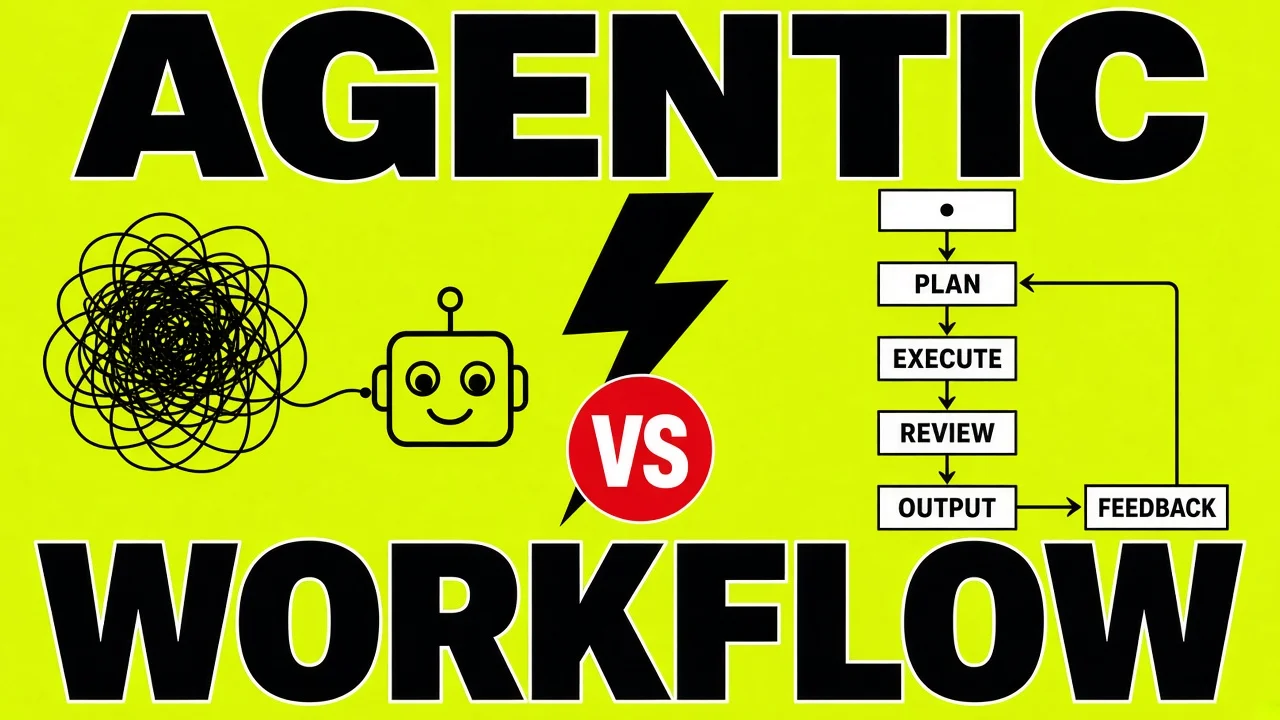
Workflow vs agent vs hybrid
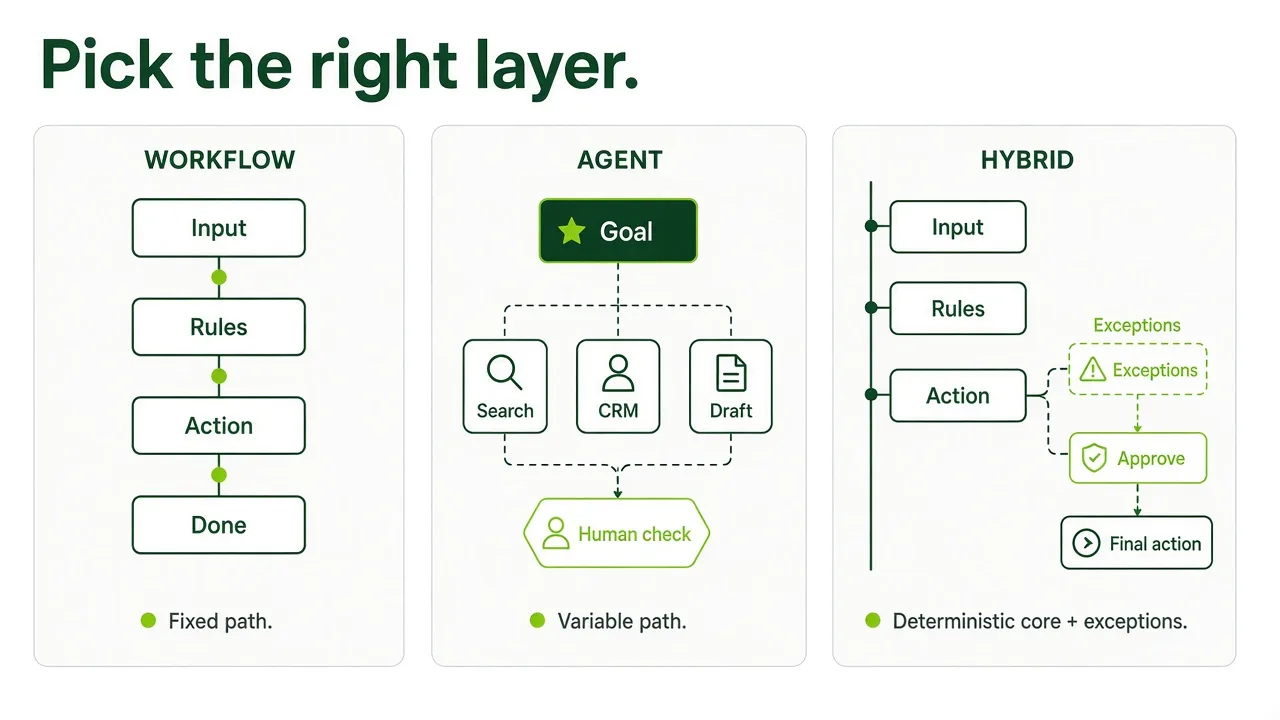
Teams often ask for “an AI agent” when a rules engine would ship faster and fail safer. Use this comparison before you pick a stack.
| Layer | Best when | Weak when | Human role |
|---|---|---|---|
| Workflow / RPA | Stable inputs and fixed steps | Paths change weekly | Own exceptions outside the flow |
| Agentic AI | Clear goal, variable path, tool use | Irreversible actions without review | Approve high-risk steps |
| Hybrid | Core is deterministic; exceptions need judgment | Everything is forced through a model | Review agent drafts; trust the core |
When automation is enough
If inputs, steps, and outcomes are stable—approve invoice, sync CRM field, send a template—use a workflow engine or rules. You get auditability, retries, and clear ownership without model drift.
- Same happy path every time, with rare edge cases you can list.
- Compliance needs a replayable trail of who did what.
- Latency and cost must stay predictable under load.
When agents earn their keep
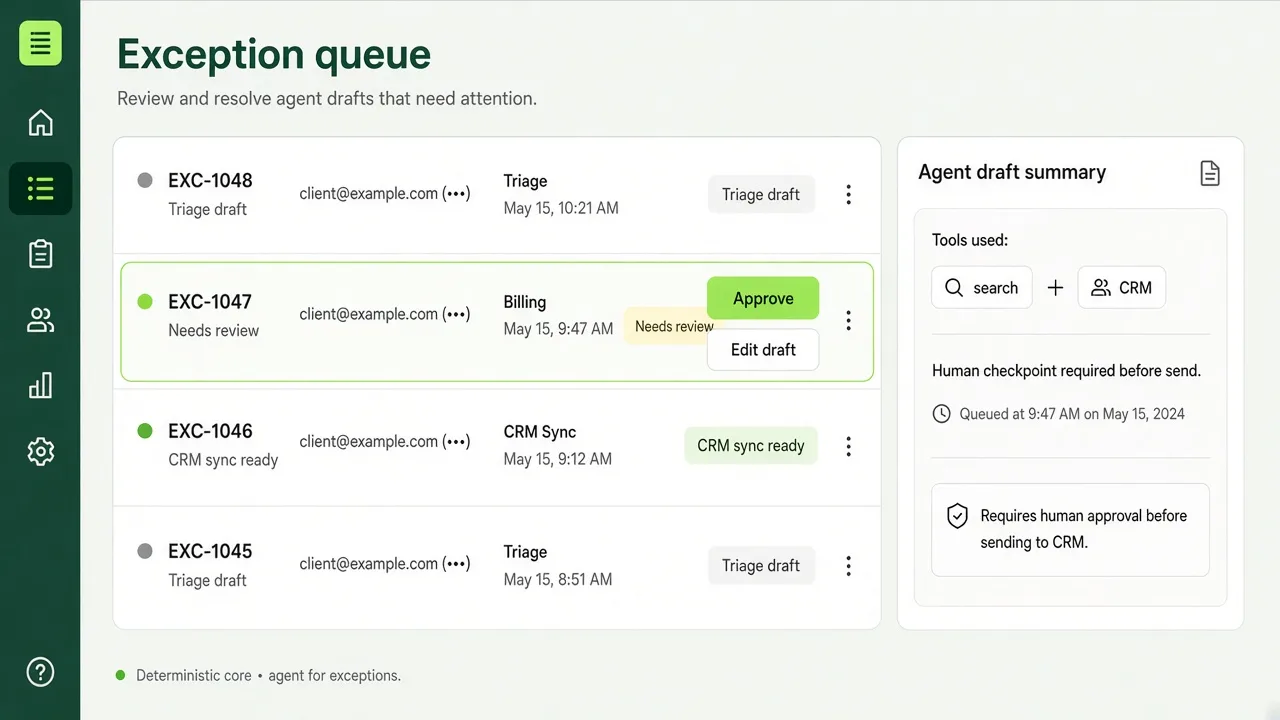
Agents help when the goal is clear but the path isn’t: triage messy tickets, research across tools, draft options a human confirms. Give them tools, guardrails, and a human checkpoint before irreversible actions.
- Unstructured input (email, tickets, documents) needs interpretation first.
- The job spans multiple systems and the next step depends on what was found.
- Staff will review drafts before send, payout, or data delete.
How we decide on client builds
We map the job before we pick models or vendors. Frequency, cost of error, data sensitivity, and review ownership usually decide the layer faster than a feature wishlist.
- Name the job in one sentence and what “done” looks like.
- Score frequency and cost of a wrong action (money, trust, compliance).
- List systems, data sensitivity, and who can approve irreversible steps.
- Choose workflow, agent, or hybrid—then define evals and a kill switch.
Ship safely: shadow, then slice
Whether you start with rules or an agent, production trust comes from how you roll out—not from the demo.
- Test on messy historical examples, not only clean happy paths.
- Run shadow mode: the system works, nothing ships without comparison.
- Open a small traffic slice with full review, then widen.
- Log every tool call and keep a pause / rollback path.